Florida Kunyambo, a widowed mother in Nsusa Village, Traditional Authority (T/A) Kapeni in Blantyre, shares a fragile hillside home with her unemployed son, 28.
The house made of sun-baked bricks is almost everything for them—like many families priced out of Blantyre’s soaring rental market.
A 2024 study by the Centre for Social Concern found that Malawi’s lowest-paid civil servant needed to save 30 percent of their income for 23.3 years to build a K12.6 million house.
This pushes the likes of Kunyambo to known disaster zones, including hillsides hit by mudslides and flash floods caused by Cyclone Freddy in 2023.
The world’s longest-running cyclone displaced 61 000 people in Blantyre, leaving 212 confirmed dead and 75 missing.
The mudslides ripped Kunyambo’s house, burying foodstuffs, clothes and other valuable items in the rubble.
“The raw brick couldn’t withstand the relentless rainstorm,” she recalls.
Kunyambo spent eight months in a congested emergency camp.
During the period of displacement, her relatives sourced funds to repair the house.
“We moved in by December 2023, but rains kept soaking and eroding the mud bricks. I feared that the house would fall again,” she states,
In December 2024, she wrapped the risky walls in a plastic sheeting to safeguard them walls from battering rains.
Kunyambo is among 181 Tadala and Tithandizane care group members who received plastic sheets from Malawi Red Cross Society for effective disaster risk management and interagency anticipatory action.
“I no longer need to worry about heavy rains and the cost of constant repairs,” she says.
Six groups in Blantyre and seven in Phalombe qualified for the group cash transfers from Red Cross. The humanitarian organisation supported the formation and training of the groups, which wrote proposals for low-cost projects to improve disaster preparedness and resilience of the populous settlements in Chilobwe and Ndirande.
The groups received K3.5 million to K4.5 million when weather experts forecast Cyclone Chido in December 2024.
Tithandizane received K3.6 million.
“We quickly bought plastic sheeting for vulnerable households and put sandbag blocks in gullies to reduce the risk of flooding,” says chairperson Dorice Nyozani.
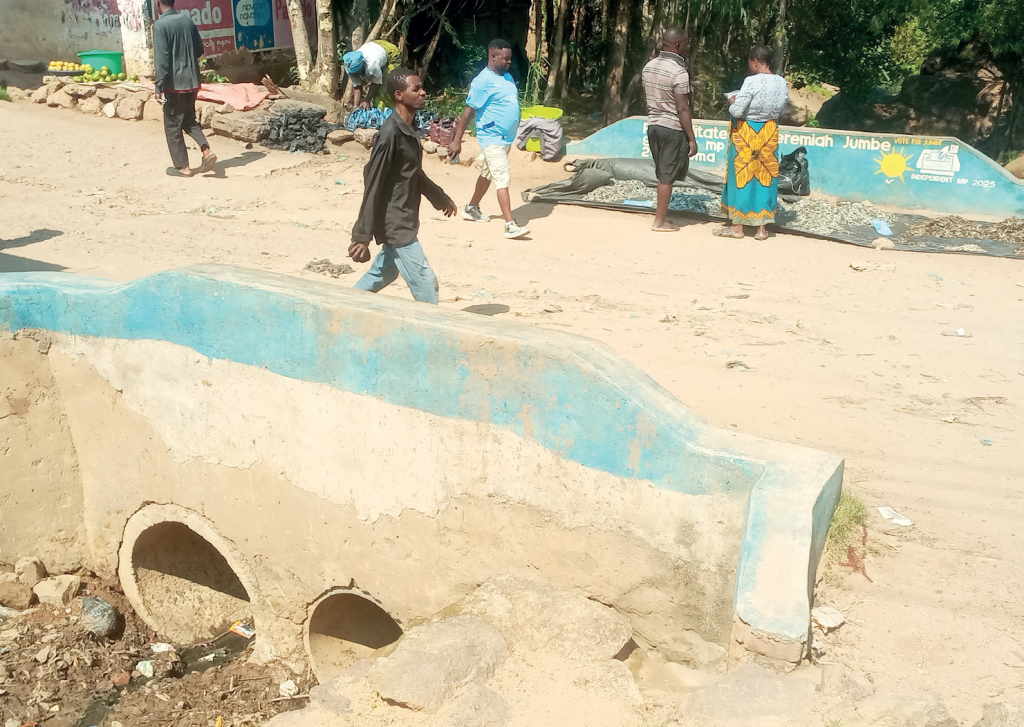
In Chilobwe on Soche hillsides, Thandizolathu group used the grants to clear waste that choked Namwili Bridge near Bonongwe Market and Masomphenya repaired drains to guide rainwater from Soche Hill.
“Every rainy season, the river surged and washed away market benches, cutting off access to surrounding areas,” says Thandizolathu chairperson Catherine Nsitu.
Communities along Namwiri turned the stream into a dumpsite, a waste management crisis that fuels flooding in the country’s cities.
“The stream flowed over the bridge as the concrete culverts were blocked by waste,” recalls Nsitu.
The story is no different in Ndirande Hill, left treeless amid rapid urbanisation. Floods and mudslides frequently batter the informal settlement downhill when torrents occur.
Cyclone Freddy destroyed graves and settlements in the city’s most populous township.
This forced Mzati and Umodzi groups to rehabilitate drainage systems to reduce rain-related disasters.
In April 2024, Malawi Red Cross disbursed group cash transfers in Blantyre and Phalombe to empower communities to better prepare for disasters and become first responders.
The humanitarian organisation implements the initiative in partnership with the Government of Malawi, Danish Red Cross, World Food Programme and Food and Agriculture Organisation.
Department of Disaster Management Affairs (Dodma) chief disaster preparedness officer Natasha Mbengo says the group cash transfer needs to be expanded to other disaster zones.
She states: “Through this project, we have built community resilience and ability to solve commonly identified problems.
“We have seen the benefits and we want to mainstream anticipatory action. The government spends huge amounts when responding to disasters. Investing in anticipatory action can save a lot of money.”
Malawi Red Cross Society secretary-general Chifundo Master Kalulu says community-led projects ensure effective transfer of knowledge and sustainability of the life-saving skills for the benefit of more people.
“We aim to entrench anticipatory action, which saves more lives and livelihoods at a fair cost,” he said.
For sustainability, some groups have embarked on waste recycling and tree nurseries for sale. Others have formed village savings and loans associations, shops and farms to entrench a business culture.